In short
- Compact HPL is worked on ordinary woodworking machines with carbide or diamond-tipped tools; the industry guidance recommends a feed of 0.03–0.05 mm per tooth.
- Round every inside corner of a cut-out with a radius of at least 6 mm, drill with a 60–80° point angle, and leave at least 1.5 mm of panel below a blind hole.
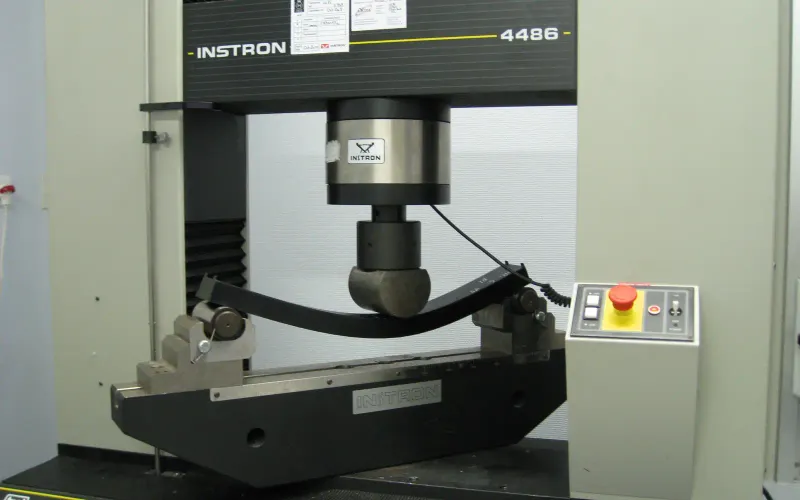
- Compact moves with temperature and humidity, so through-fixings need holes 2–3 mm oversize. Rushil's interior compact gives a screw pull-out of 3 514 N.
How this guide was put together
This article draws on proHPL's technical leaflets 'Verarbeitung von HPL-Compact' (February 2021) and 'Allgemeine Verarbeitungsempfehlungen für HPL' (January 2022), and on the ICDLI's 'Processing HPL compact laminates' (June 2017). proHPL is the decorative laminates group of the German plastics industry association pro-K. Each point is attributed, and the sources are listed at the end.
What compact is, and how thick it needs to be
Compact is decorative high-pressure laminate to EN 438 more than 2 mm thick, with a homogeneous, closed cut edge, proHPL explains. Below 3 mm it can be bonded to a rigid substrate; up to 5 mm it needs rigid support at short intervals; from about 5 mm it is generally self-supporting; and over 8 mm it suits large horizontal uses with wider support spacing. Its edges need no coating or lacquer.
Storage and handling
Store panels flat at about 18–25 °C and 50–65 % relative humidity, protected from wet and direct sun, on a level base with a cover board on top; where that is impossible, stand them at about 80° with full support. Panels stored out of flat deform, and the thicker they are, the less they recover. Lift sheets one by one rather than dragging them over each other, and remove protective film from both faces at the same time.
Sawing
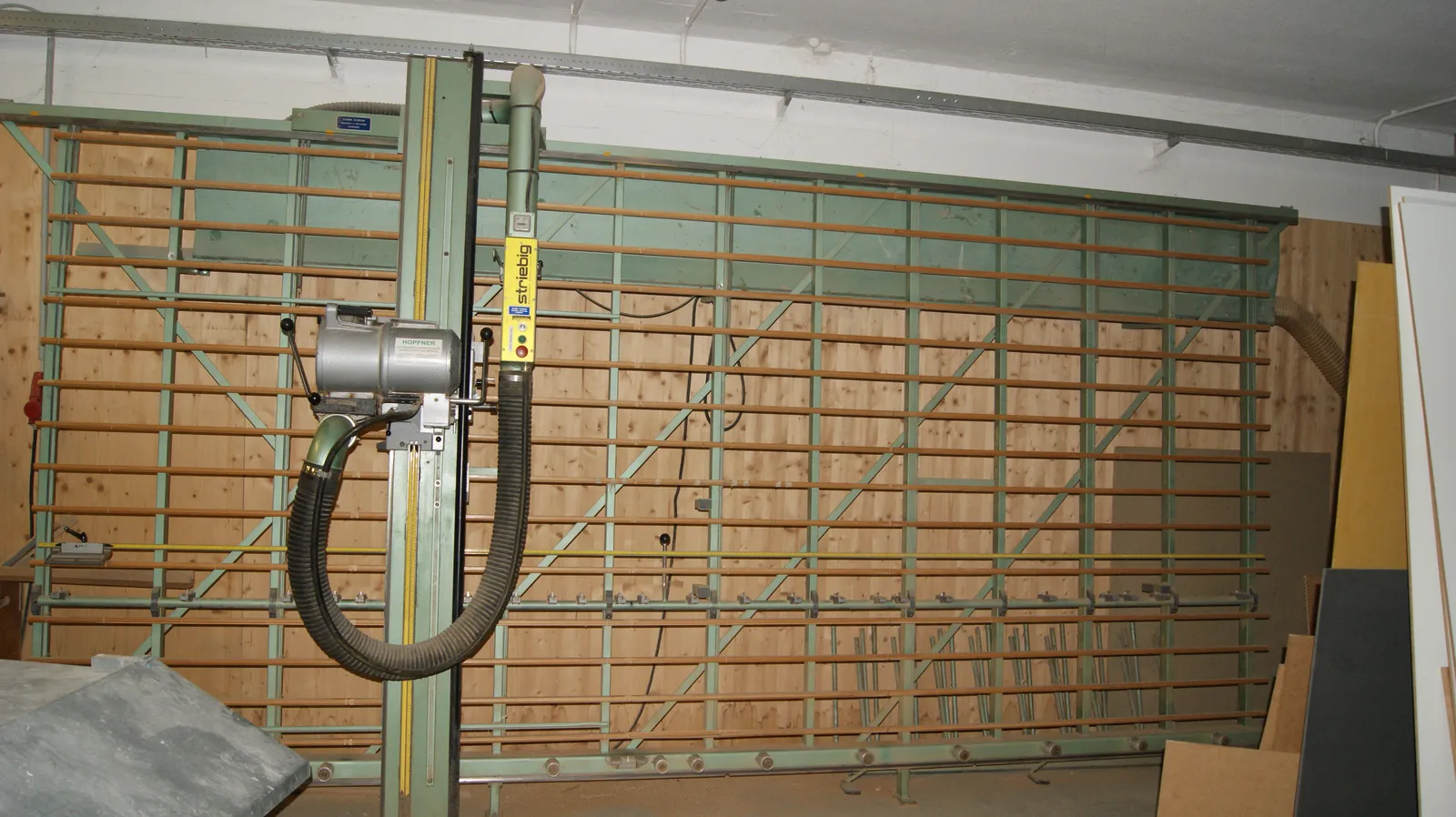
Use carbide or diamond-tipped tools chosen with the tool maker, work at a lower feed than for HPL-faced boards, avoid local overheating and extract the dust. On panels that are decorative on both faces, a scoring blade that cuts the underside first prevents breakout; packing with plywood, hardboard or HPL also helps.
Feed decides the quality of the cut. proHPL recommends 0.03–0.05 mm per tooth, with feed rate = feed per tooth × speed × number of teeth. Its worked example: a 52-tooth blade at 3,500 rpm and 0.04 mm per tooth gives 7.28 m/min.
Milling, edges and cut-outs
Leave 2–5 mm for edge finishing; use diamond-tipped tools for profiles, and hold workpiece and tool firmly, because the cutting pressure is high. Knife marks are unavoidable but can be reduced by climb milling with mechanical guidance, then sanded and polished away; a silicone-free furniture oil improves the look of a milled edge. Inside corners of cut-outs must always be rounded, with a radius as large as possible and at least 6 mm.
Drilling and threads
Use drills made for plastics, with a point angle of about 60–80° instead of the 120° of a metal drill, a steep helix and wide flutes; for through holes, 50–60°. Slow the feed as the drill breaks through, and back the panel with a board that can be drilled into, to avoid splintering on the exit side.
A blind hole must leave at least 1.5 mm of panel, and a hole drilled parallel to the face at least 3 mm of material on each side. Threads can be cut and self-tapping screws used: for self-tapping screws, drill 0.8 × the thread pitch smaller than the screw's outer diameter, and grease the screws first. Threaded inserts take repeated screwing; expanding anchors give the highest pull-out but do not suit the narrow edge.
Joints and fixings that allow movement
Compact changes size slightly with the climate, about half as much lengthwise as across. Through-fixings for rigid parts need holes 2–3 mm larger than the screw or rivet, with plastic washers or sliding foil; panels glued together must run in the same direction. Tongue-and-groove joints need a groove and cheeks at least 3 mm wide, a groove no deeper than 10 mm, play for movement, and panels at least 10 mm thick.
On walls, panels go on battens at least 2 cm thick so air can circulate behind them. For exterior cladding the leaflet sets a fixed point near the middle of the panel, sliding points 2–3 mm oversized, and edge distances of at least 20 mm and at most ten times the panel thickness; façades that need approval follow their own system rules. Large cubicle doors need more than two hinges and should be cut lengthwise from the sheet.
Reading this against the Rushil range
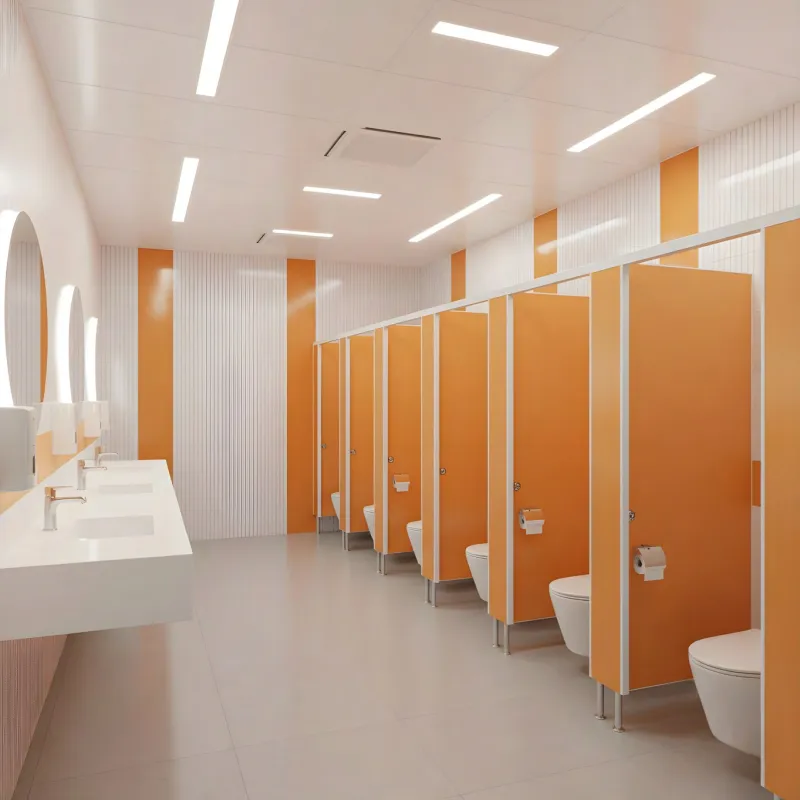
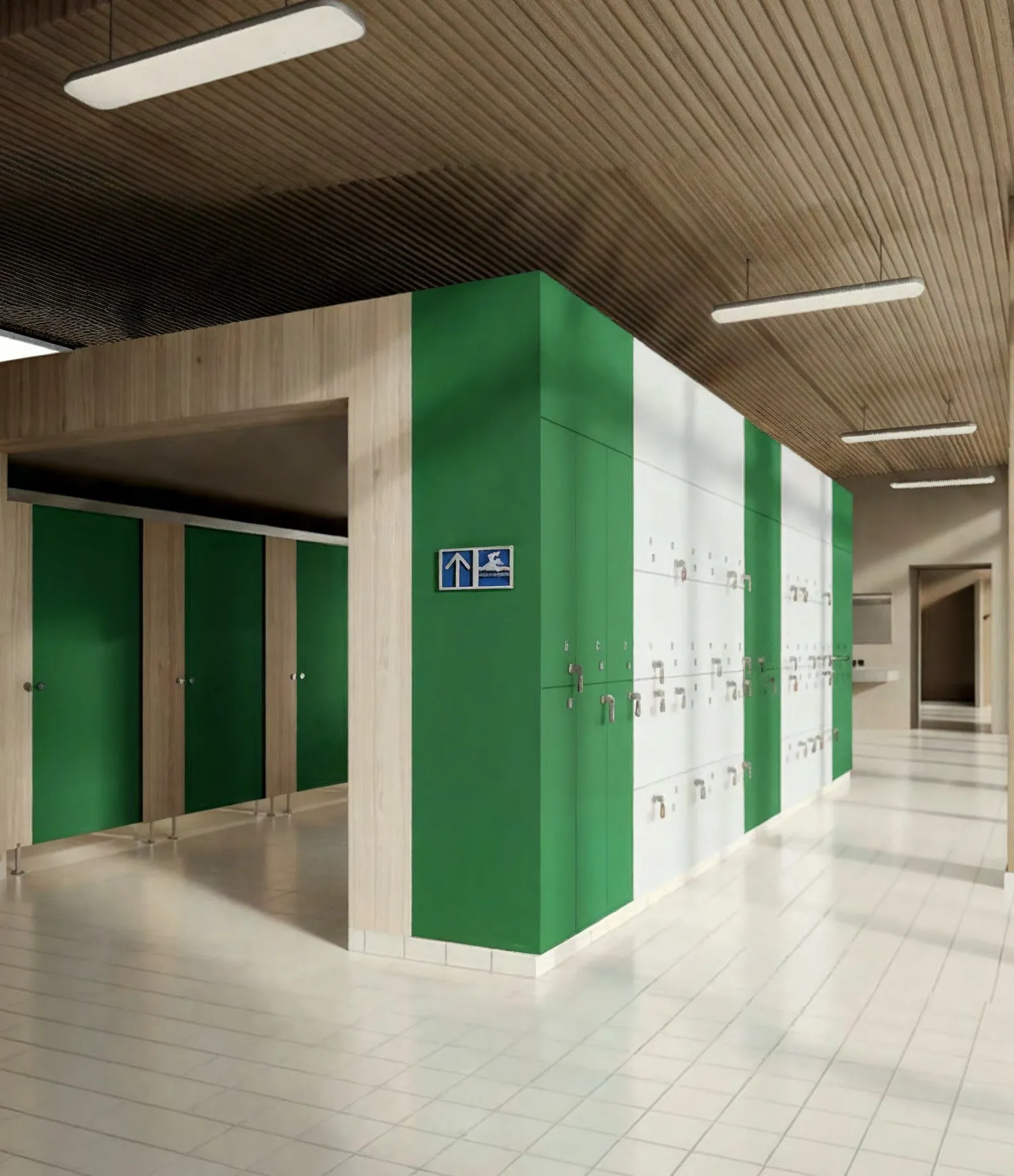
Rushil's interior compact is classified to EN 438-4; the TOPAZ and VAULT data sheets report a density of 1.47 g/cm³ and a screw pull-out of 3,514 N to ISO 13894-1. Its exterior compact, KLADS, is classified to EN 438-6. Formats run up to 4330 × 1830 mm, which is where the machining starts: plan the cutting list so that doors and other long parts run lengthwise.
Common questions
What feed suits sawing compact HPL?
proHPL recommends 0.03–0.05 mm per tooth, lower than for HPL-faced boards, with carbide or diamond-tipped tools; a scoring blade prevents breakout on the underside.
How deep can I drill into compact HPL?
Leave at least 1.5 mm of panel below a blind hole, and at least 3 mm of material on each side of a hole drilled parallel to the face (proHPL).
Why must fixing holes in compact be oversized?
Compact moves slightly with temperature and humidity. Holes 2–3 mm larger than the fastener, with plastic washers or sliding foil, let it move without stress (proHPL).
Sources
- proHPL (pro-K) — Verarbeitung von HPL-CompactFebruary 2021 · de
- proHPL (pro-K) — Allgemeine Verarbeitungsempfehlungen für HPLJanuary 2022 · de
- ICDLI — Processing HPL compact laminatesJune 2017 · en
Compiled for this site from the publications listed above. Summaries are in our own words, not quotations — read the originals for the full argument.