In short
- Compact HPL is hard work for a tool: drilling it took a unit cutting resistance of 248 N/mm², against 56 for MDF and 72 for chipboard.
- Climb milling gives lower forces and a smoother edge: a roughness of 0.22–1.39 µm, against 0.99–4.75 µm in conventional milling.
- Tool condition decides the hole: worn carbide raised the delamination factor from 1.036 to 1.473, so keep diamond or carbide tooling sharp and the machine rigid.
How this review was put together
This article summarises four open-access, peer-reviewed papers: a drilling study from Rzeszów University of Technology (Szwajka, Zielińska-Szwajka and Trzepieciński, Materials, 2024), a milling study from VSB – Technical University of Ostrava (Frydrýšek et al., Applied Sciences, 2022), a drilling study on compact laminate from Çanakkale Onsekiz Mart University and the University of Ruse (Bilge, Motorcu and Ivanov, Pamukkale University Journal of Engineering Sciences, 2017), and a cracking study from the Fraunhofer Institute for Wood Research (Lukowsky and Meder, Applied Sciences, 2022). It adds research to the practical guidance in a separate article on this site; it does not replace a tool maker's settings.
A hard material, measured
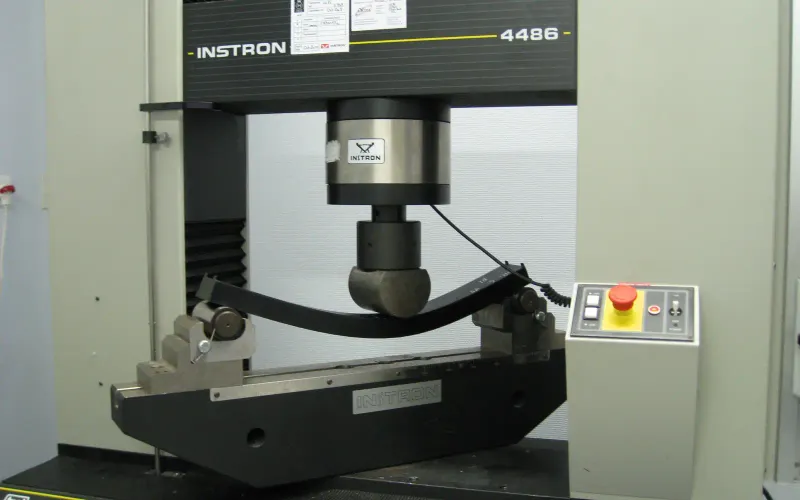
Drilling 10 mm holes, the Rzeszów team measured the unit cutting resistance of four panels: 248 N/mm² for HPL, against 138 for plywood, 72 for chipboard and 56 for MDF. The cutting torque on HPL was four to six times that on MDF. The HPL board in the study had a density of 1,470 kg/m³ and a bending strength of 110 MPa; the Ostrava team measured 113 and 119 MPa in two directions for theirs, with a modulus of about 13.3 to 13.6 GPa. Strength and machining effort come from the same dense, resin-rich structure.
Milling: the direction of the cut
In Ostrava, researchers milled an HPL plate dry on a five-axis machine at 18,000 rpm with a 10 mm cutter tipped with polycrystalline diamond, and recorded forces and moments in 36 tests, in both climb (down) milling and conventional (up) milling. Forces and moments were higher in conventional milling.
The surface told the same story. In climb milling, roughness measured across the cut ranged from 0.22 to 1.39 µm; in conventional milling, from 0.99 to 4.75 µm. The team's recommendation is plain: mill HPL in climb mode. They also note that they had found no earlier scientific publications on milling HPL.
Drilling: the tool edge decides
In Çanakkale, researchers drilled 12 mm compact laminate of the standard EN 438 grade with 12 mm carbide end mills, some new and some worn from series production, at three cutting speeds, three feeds and with straight or peck drilling. They measured the delamination factor: the largest damaged diameter at the hole exit divided by the hole diameter, where 1.0 means no damage.
With new tools the average factor was 1.036; with worn tools, 1.473. With new tools, cutting speed explained 65 % of the variation; with worn tools, feed rate took over, at 59 %. A sharp tool, in other words, makes the material forgiving, and a worn one makes every other setting matter more.
Where cracks start
Machining also decides where a laminate is weakest in service. Studying why laminates crack, the Fraunhofer researchers confirmed a field observation: cracks tend to start at sharp cut-outs and are often accompanied by further cracks in the undisturbed surface. It is the scientific reason behind the industry rule to give inside corners of cut-outs a generous radius.
What it means in the workshop
Read together, the studies support a short list: diamond or carbide tooling kept sharp, because tool wear is what turns a clean hole into a damaged one; climb milling for edges that will be seen; feeds controlled carefully as tools wear; a rigid machine that can take four to six times the torque of MDF; and rounded inside corners. Compact rewards that care with edges that need no banding. Rushil's compact data sheets report a density of 1.47 g/cm³, in the same range as the boards in these studies.
Common questions
Should compact HPL be milled in climb or conventional mode?
In the Ostrava study, climb (down) milling gave lower forces and a smoother surface: roughness across the cut of 0.22 to 1.39 µm, against 0.99 to 4.75 µm in conventional milling. The authors recommend climb milling for HPL.
How much does tool wear matter when drilling compact?
A great deal. Drilling 12 mm compact with carbide end mills, the Çanakkale team measured an average delamination factor of 1.036 with new tools and 1.473 with worn ones; with worn tools, feed rate became the dominant factor.
Is compact harder to machine than MDF or chipboard?
Yes. A 2024 drilling study measured a unit cutting resistance of 248 N/mm² for HPL against 56 for MDF and 72 for chipboard, with four to six times the cutting torque of MDF. That calls for diamond or carbide tooling and a rigid machine.
Sources
- Materials 17(9), Szwajka K., Zielińska-Szwajka J., Trzepieciński T. — Experimental Analysis of Smart Drilling for the Furniture Industry in the Era of Industry 4.0Apr 26, 2024 · en
- Applied Sciences 12(24), Frydrýšek K., Skoupý O., Mrkvica I., Slaninková A., Kratochvíl J., Jurga T. et al. — Stochastic Evaluation of Cutting Tool Load and Surface Quality during Milling of HPLDec 7, 2022 · en
- Pamukkale University Journal of Engineering Sciences 23(4), Bilge T., Motorcu A. R., Ivanov A. — Evaluation of the delamination factor for drilling of compact laminate composite material with tungsten carbide toolsJan 1, 2017 · en
- Applied Sciences 12(24), Lukowsky D., Meder M. — Studies of the Cracking Behaviour of High-Pressure LaminatesDec 13, 2022 · en
Compiled for this site from the publications listed above. Summaries are in our own words, not quotations — read the originals for the full argument.