In short
- LRV is the share of light a surface reflects, from 0 for black to 100 for white; in the Rushil range it runs from 82 for Calm Meadow to 3.91 for Jade Black.
- Accessibility guidance such as ISO 21542 and BS 8300 works with a difference of at least 30 LRV points between surfaces people must tell apart, such as a door and its wall.
- This site shows a published LRV for 191 decors and the decor explorer sorts by it; check a physical sample in the room's light before deciding.
What LRV measures
Light reflectance value is the share of visible light a surface reflects, on a scale from 0 for a perfect black to 100 for a perfect white. Real materials sit between: in the Rushil range, Calm Meadow (6006) reflects 82, White (1001) 73, Urban Ash (1076) 30.73 and Jade Black (1015) 3.91.
LRV says nothing about hue. A blue and a brown can have the same LRV, and to someone with reduced vision they read as the same surface. That is exactly why it is the right measure for contrast: it describes what the eye can separate, not what the colour is called.
The 30-point rule
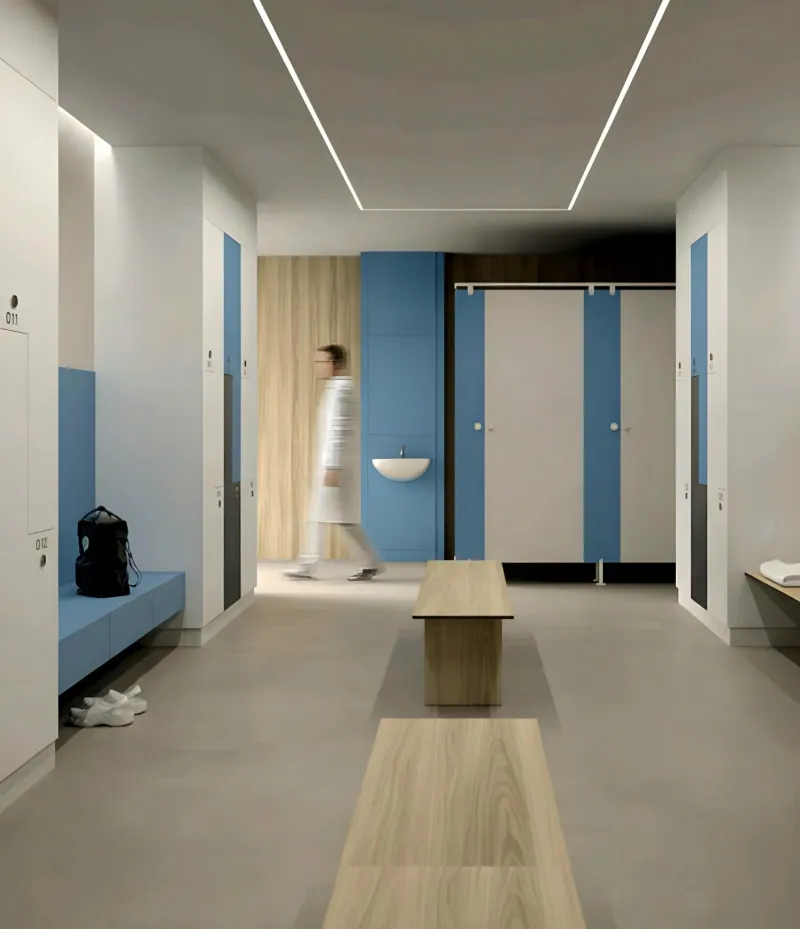
Much accessibility guidance — ISO 21542 and the UK's BS 8300 among it — works with a difference of at least 30 LRV points between adjacent surfaces that people need to tell apart: a door and the wall around it, a wall and the floor, a handrail and its background, a worktop and the cabinets beneath it.
The requirement that applies to your building depends on the country and the building type, so check it. As a working figure, 30 points is where most guidance starts.
Working it through
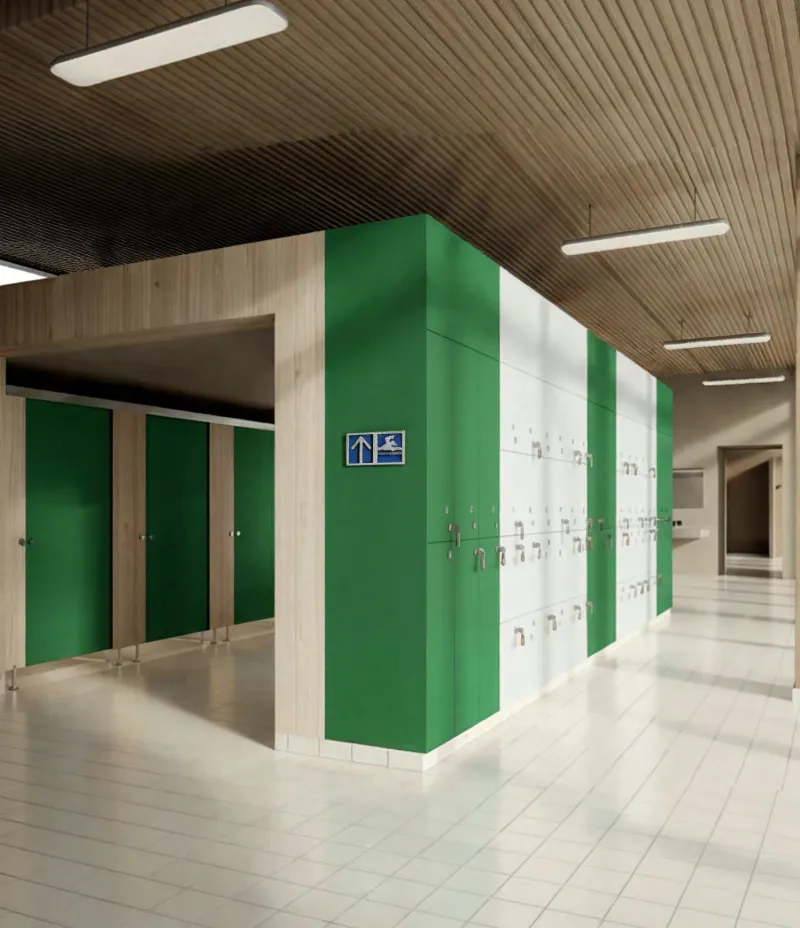
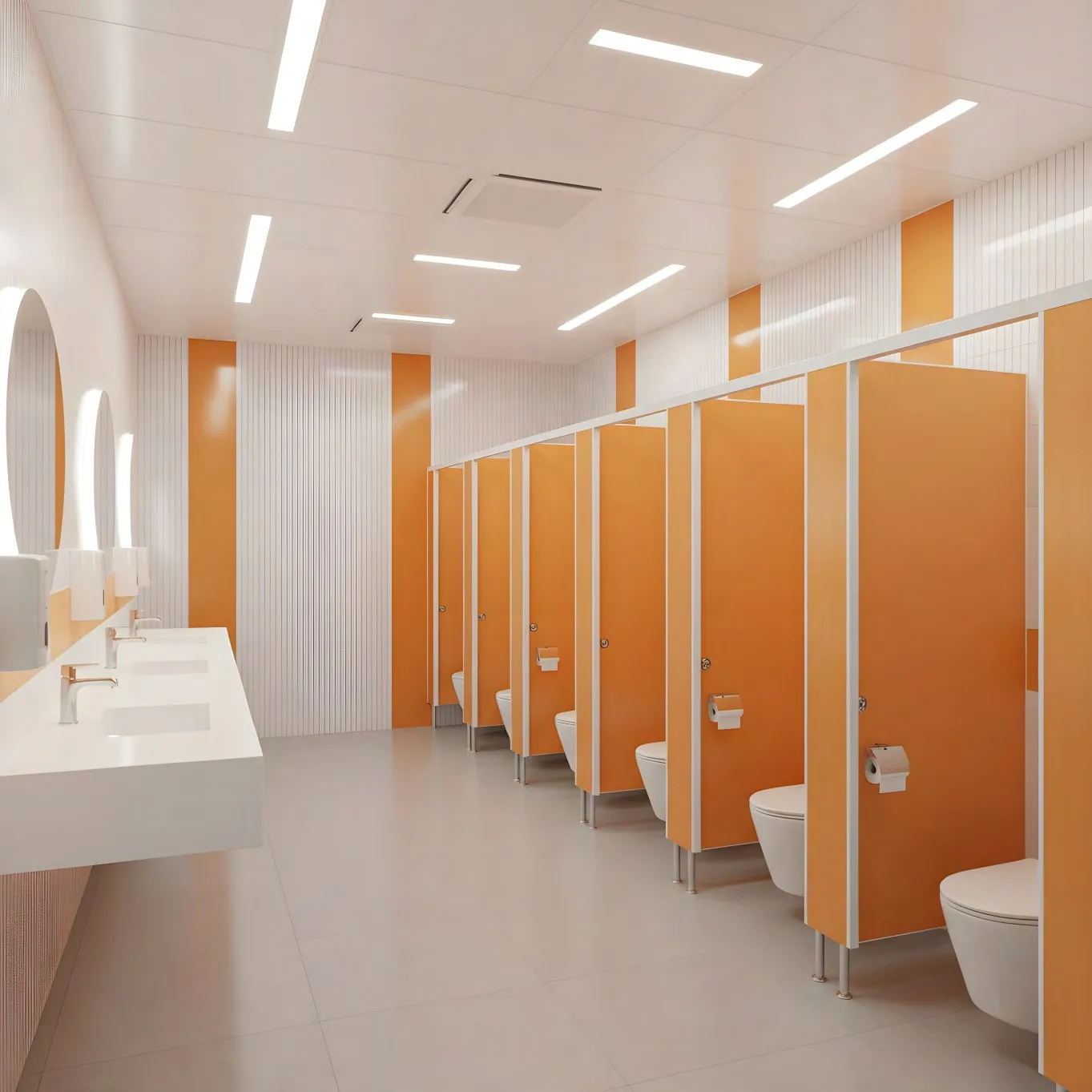
Take a washroom with walls in Calm Meadow at 82. Cubicle doors in Deep Ash (1077) at 19.3 give a difference of 62.7 points — clearly visible. Doors in Urban Ash at 30.73 still give 51. Doors in a light grey such as Ash Soft (1074) at 40.47 give 41.5 — still above 30, but the margin is shrinking.
Do the same between the decor and the surfaces it meets that are not laminate — the floor finish, the paint, the sanitaryware — using their manufacturers' LRV figures. Contrast is about the pair, never about a single surface.
What a published LRV does and does not tell you
LRV is measured on a sample under standard conditions. Gloss level, texture and lighting all change how a finished surface reads: a high-gloss finish under a downlight can show glare that wipes out the contrast the numbers promised. Check samples in the light of the actual room before signing off.
On this site, LRV is shown only where Rushil's Product Program table gives one and the name in the table matches the decor — 191 decors at present. The decor explorer can sort by LRV, which is the quickest way to find candidates on either side of a 30-point gap.
Common questions
What is a good LRV difference for accessibility?
At least 30 points between adjacent surfaces is the figure most accessibility guidance works with, including ISO 21542 and BS 8300. Check the requirement that applies to your country and building type.
Where do I find the LRV of a laminate decor?
On each decor page of this site, where Rushil's Product Program table publishes it. Decors without a published value show no LRV rather than an estimate.
Does the finish change the LRV?
The published figure is measured on a sample. Gloss and texture change how much light reaches the eye from a given angle, so check a physical sample in the room's lighting before relying on the number alone.
Written for this site from manufacturer test reports. Not reproduced from any other source.