In short
- Behind a tiled shower the grout lets water in: a tiled wall wetted for 15 minutes needs about six months to dry, and a Swedish study found microbial growth in 8 of 14 specimens from the wettest spots of ordinary bathrooms.
- Large compact panels replace long runs of grout with a few sealed joints: one 1830 × 4330 mm VAULT sheet covers almost 8 m².
- VAULT gains 0.2 % mass in the moisture test and 0.4 % in boiling water against limits of 2 %, and shows no fungal growth to ASTM G21.
How this guide was put together
This guide draws on a study by RISE Research Institutes of Sweden, published in 2020, that sampled the back of ceramic tiles in 13 bathrooms; on the NHS's Health Building Note 00-10, Part B, on walls and ceilings; and on Rushil's VAULT data sheet.
What happens behind a tiled wall
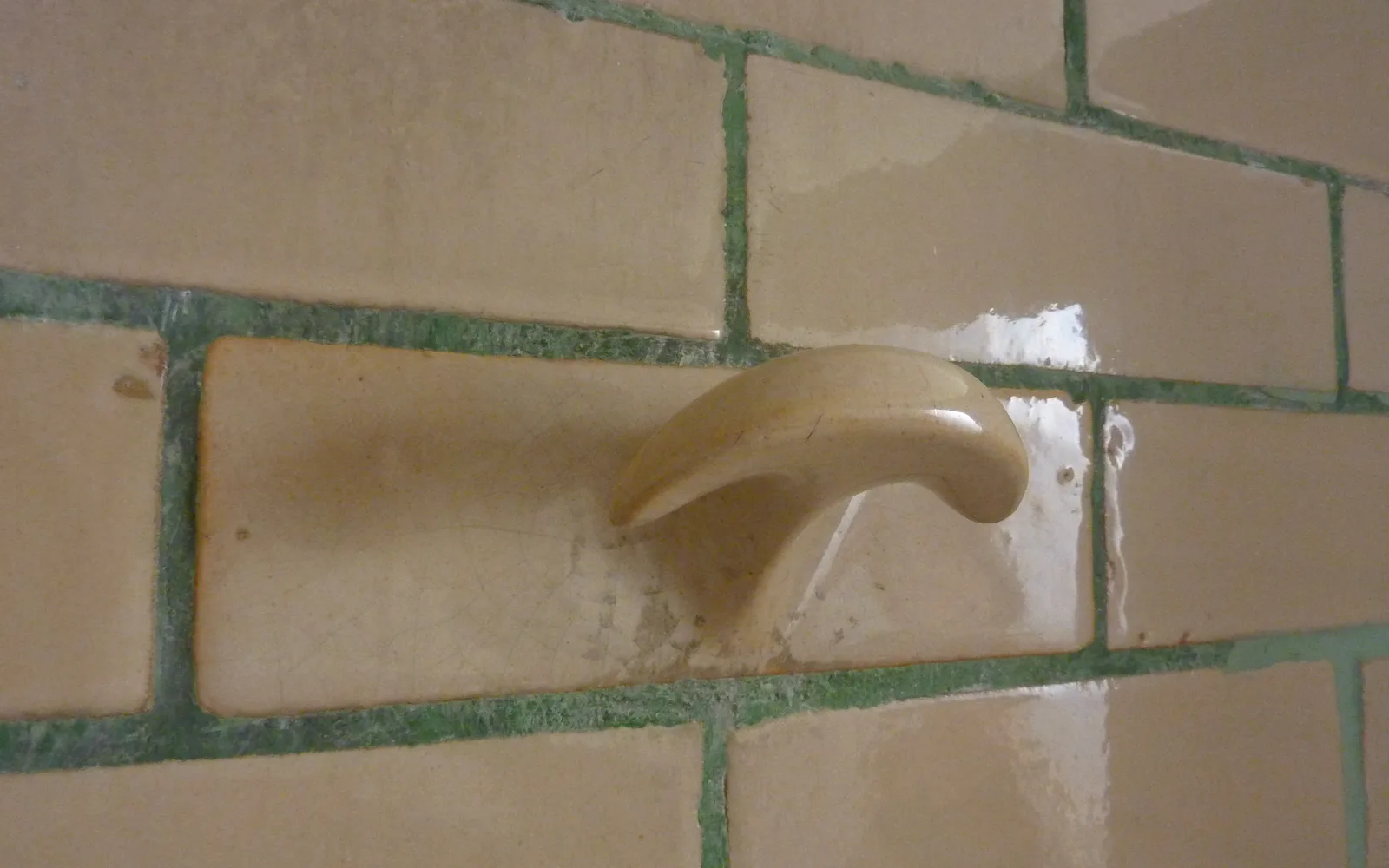
In a tiled wet room, RISE explains, the tiles are fixed with cement-based adhesive onto a waterproof membrane. When water runs down the wall, capillary action draws it through the grout joints into the adhesive behind the tiles. The wall then dries only by diffusion, a weaker process, so it takes water in faster than it gives it back. By the researchers' account a tiled wall exposed to water for 15 minutes needs roughly six months to dry out, so in a bathroom used every day there is always free water behind the tiles.
That water carries soap residues and skin particles, food for microorganisms, and moulds can grow on building materials from about 75 % relative humidity at 20 °C.
What the researchers found
The team took 120 specimens from 13 bathrooms in five buildings, all 20 to 21 years old and with no visible moisture damage, cutting through tile, adhesive and membrane. In the spots most exposed to shower water, 8 of 14 specimens analysed showed microbial growth; in less exposed spots, 4 of 11 and 1 of 11; in places that stayed dry, none of 6. The finds included moulds of the genera Aspergillus, Penicillium and Cladosporium, and actinomycetes, on the back of the tiles, in the adhesive and on the membrane, despite the alkaline environment.
The authors note that growth behind tiles probably has little effect on the air in the bathroom. The point is what the joints let in: a hidden layer that stays wet for months, in walls that look perfectly sound.
Fewer joints, less to go wrong
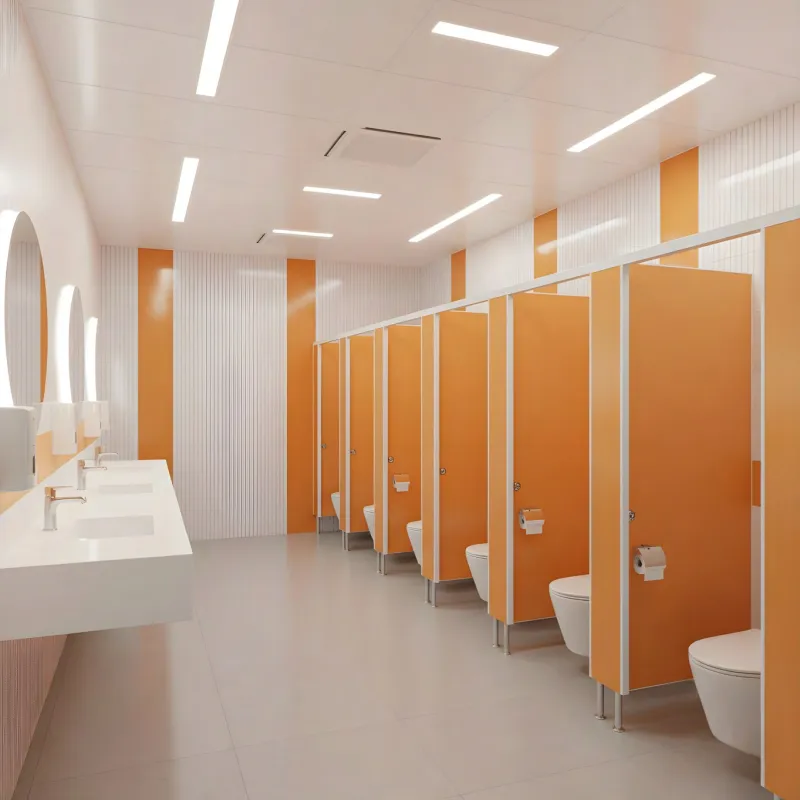
HBN 00-10 asks for walls in clinical areas that are smooth, hard, seamless and impervious, free from fissures, open joints or crevices. A compact panel meets that with size and substance. It is solid through its thickness, made of paper and thermoset resins under a closed melamine surface, and a single VAULT sheet of 1830 × 4330 mm covers almost 8 m² without a grout line.
Water stays on the surface, where it can be wiped away. Rushil's VAULT data sheet reports a mass gain of 0.2 % in the moisture test and 0.4 % in boiling water, against limits of 2 %, and a rating of 0, no growth, in the ASTM G21 fungal test. These are test results, not a declaration of conformity.
Detailing still matters
Panels do not abolish joints; they replace long runs of grout lines with a handful of panel joints, edges and penetrations. Those must be sealed or profiled and allow for movement, so choose a wall system with tested joint details and fix it as its supplier specifies.
What this means for washrooms
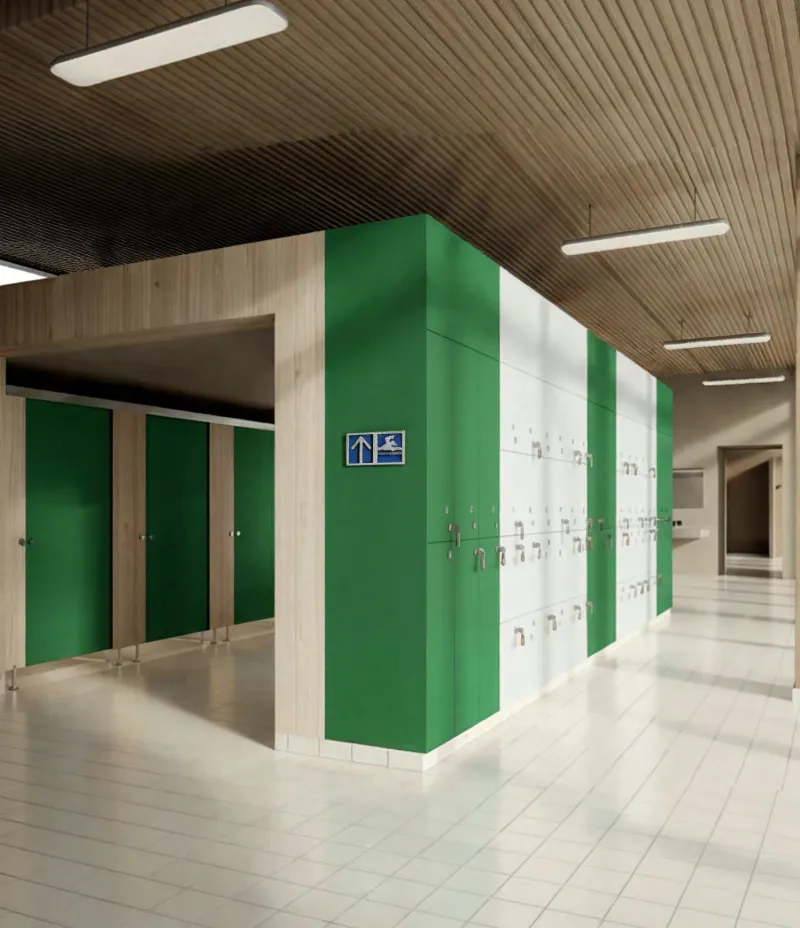
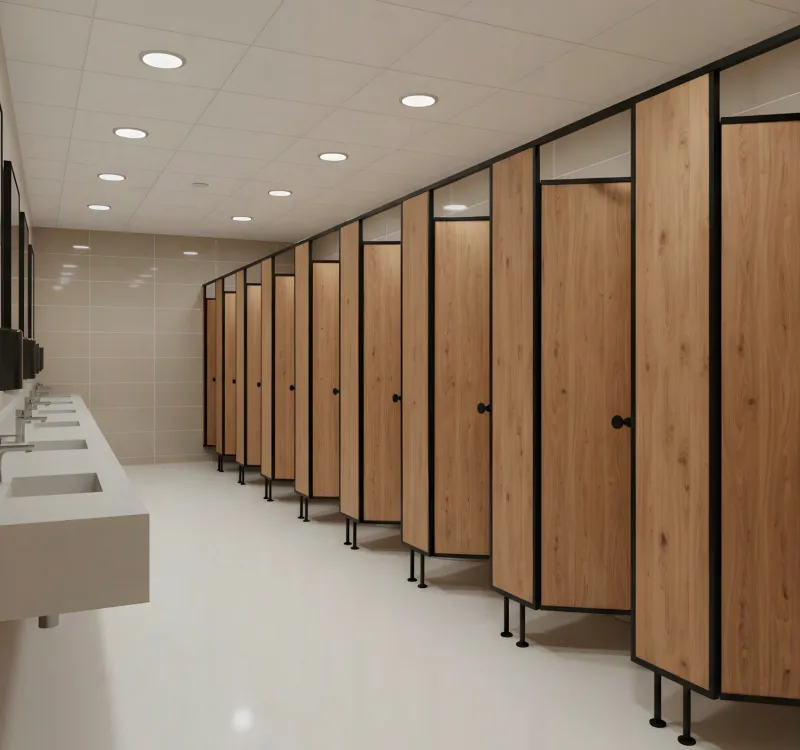
Behind a tiled shower wall there is a layer that can stay wet for months, and a Swedish survey of ordinary, undamaged bathrooms found microbes living there in most of the wettest spots. Compact panels keep the water where it lands and leave nothing for it to soak into. VAULT is Rushil's compact for washrooms, changing rooms and cubicles; samples and the full data sheet are available on request.
Common questions
Why do tiled shower walls stay damp?
Water is drawn through the grout joints by capillary action and dries out only by diffusion, which is slower. RISE Research Institutes of Sweden puts the drying time of a tiled wall wetted for 15 minutes at roughly six months.
Was mould found behind tiles in normal bathrooms?
Yes. In 13 bathrooms about 20 years old with no visible damage, RISE found microbial growth in 8 of 14 specimens from the wettest spots and in none from spots that stayed dry.
Do compact wall panels need joints?
Far fewer. A single 1830 × 4330 mm VAULT sheet covers almost 8 m²; the remaining panel joints, edges and penetrations must be sealed or profiled as the wall-system supplier specifies.
Sources
- E3S Web of Conferences 172 (NSB 2020), Bok G., Johansson P. — Microbial growth behind tiles in bathroomsJan 1, 2020 · en
- Department of Health, Health Building Note 00-10 — Part B: Walls and ceilingsJan 1, 2013 · en
- Rushil Decor — VIR VAULT (CGS / CGF) — Product Data Sheeten
Compiled for this site from the publications listed above. Summaries are in our own words, not quotations — read the originals for the full argument.