In short
- The UK Health and Safety Executive calls the pool hall one of the most aggressive atmospheres in any building: warm, humid air laden with chloramines that attack even stainless steel.
- A compact panel is paper and thermoset resin with no metal in it, so there is nothing to corrode; specify hinges, legs and fixings made for pool atmospheres.
- VAULT gains 0.2 % mass in the moisture test and 0.4 % in boiling water against limits of 2 %, scores grade 5 for water vapour and staining, and shows no fungal growth to ASTM G21.
How this guide was put together
This guide draws on a briefing that the UK Health and Safety Executive issued to its inspectors in 2002 on stress corrosion cracking of stainless steels in swimming pool buildings, now archived but still a clear account of the pool-hall climate, and on Rushil's VAULT data sheet. Questions of structure and load-bearing fixings belong to structural engineers; this guide is about fit-out.
One of the most aggressive atmospheres in any building
The HSE explains why pool halls are hard on materials. Higher water temperatures and more bathers have led to more chemical disinfection, and chlorine-based disinfectants combine with what bathers bring in to form chloramines, thought to be the most important factor in the corrosion of stainless steel in a pool environment. Air in pool halls is generally held about 1 °C above the water temperature, which accelerates corrosion, and evaporation, water features and recirculated air keep humidity high.
Near the ceiling, chlorine-bearing species from the pool condense on components and dry out, again and again, building up aggressive concentrations. The HSE's conclusion is blunt: the atmosphere of an indoor swimming pool is one of the most aggressive to be found in a building environment.
What it did to stainless steel
The briefing was prompted by failures. In 1985 the concrete roof of a swimming pool in Uster, Switzerland, collapsed, killing 12 people; it hung on stainless steel rods in tension that had failed by stress corrosion cracking. In 2001 the suspended ceiling of a municipal pool in the Netherlands came down for a similar reason, and the HSE notes other incidents involving stainless steel in safety-critical load-bearing uses in modern pools and leisure centres.
The lesson for designers is that in pool air, material choice matters even for metals usually thought of as corrosion-proof. Load-bearing components need grades and details chosen by engineers for that environment.
Where compact fits
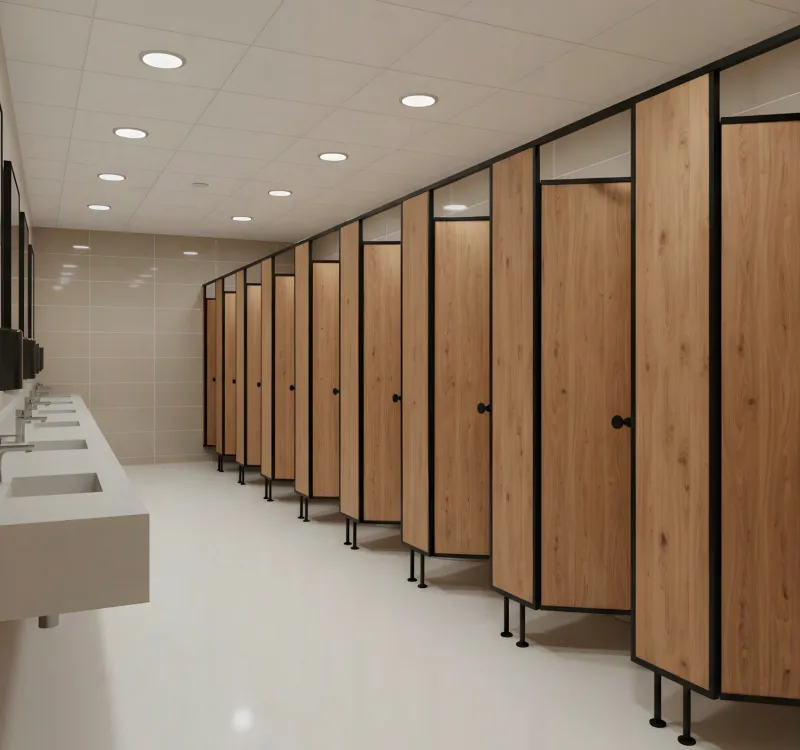
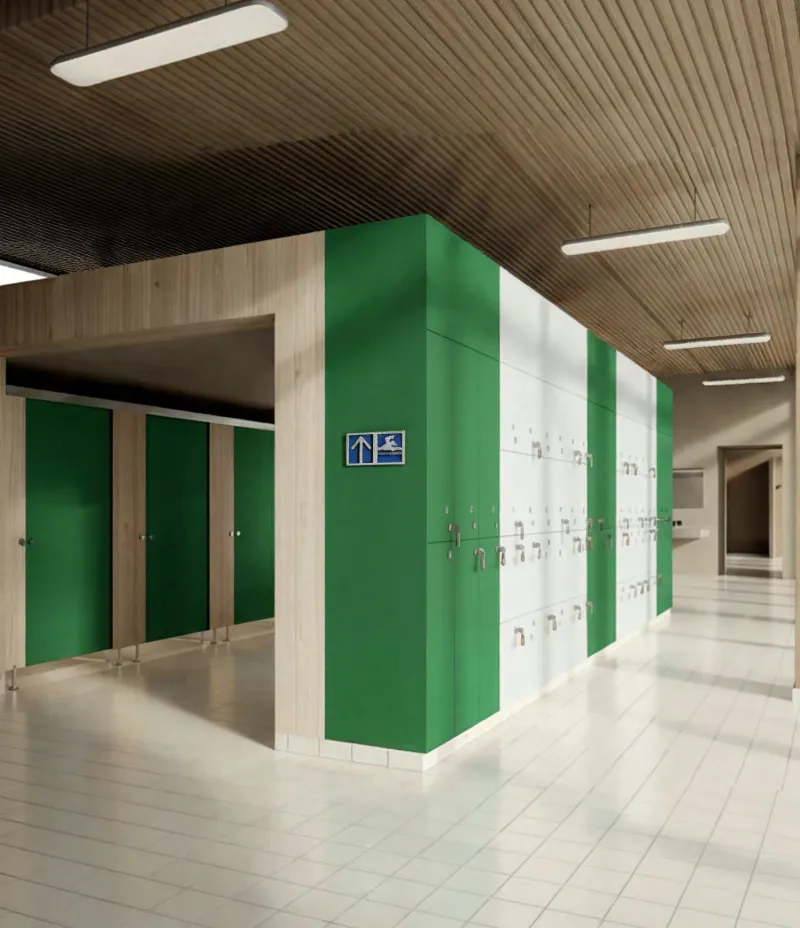
Cubicles, lockers, benches and wall linings face the same air without carrying a building. A compact panel is made of kraft paper and thermoset resins, with no metal in it to corrode, and it is solid through its thickness. Rushil's VAULT data sheet reports a mass gain of 0.2 % in the moisture test and 0.4 % in boiling water, against limits of 2 %, grade 5 for water vapour and staining, and a rating of 0, no growth, in the ASTM G21 fungal test. These are test results, not a declaration of conformity.
The hardware is another matter. Hinges, legs, locks and fixings remain metal, so choose cubicle and locker systems whose hardware is made for pool atmospheres.
What this means for pools and leisure centres
The HSE describes the pool hall as one of the harshest climates a building can have: warm, humid and laden with chloramines that attack even stainless steel. For the fit-out that people touch every day, cubicles, lockers, benches and wall panels, a compact laminate brings a material with nothing to corrode, a surface that shrugs off moisture and stains, and published test results to show it.
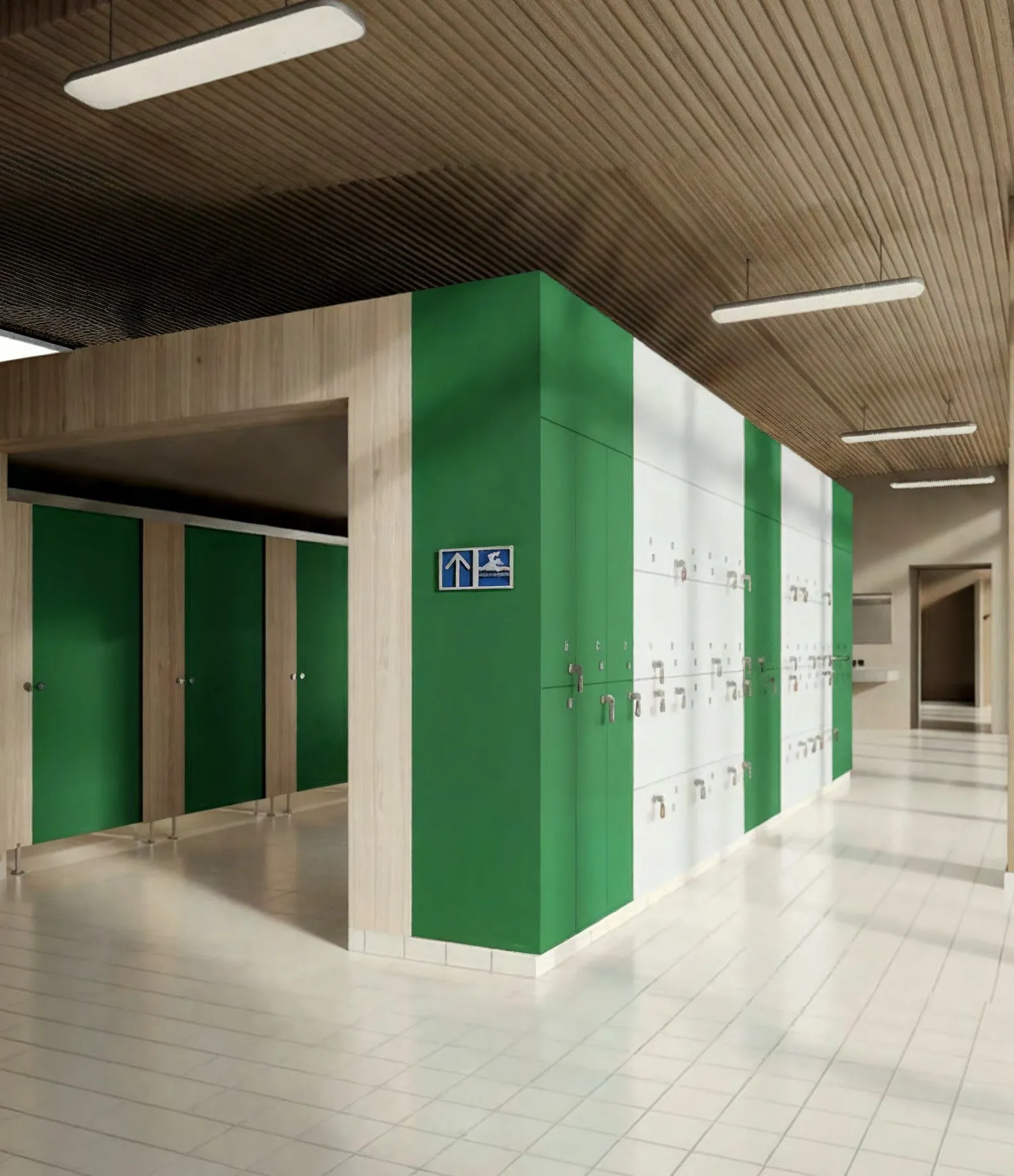
VAULT is Rushil's compact for exactly these rooms, in general-purpose and fire-retardant grades. Samples and the full data sheet are available on request.
Common questions
Why are pool halls so hard on materials?
Warm air, held about 1 °C above the water, high humidity and chloramines formed from chlorine disinfectants combine, and chlorine-bearing deposits condense and dry repeatedly near the ceiling. The UK HSE calls the indoor pool atmosphere one of the most aggressive in any building.
Does compact HPL corrode?
A compact panel is made of paper and thermoset resins and contains no metal, so there is nothing in it to corrode. Its hinges, legs and fixings are metal, so specify hardware made for pool atmospheres.
What do VAULT's results show for wet, humid rooms?
Its data sheet reports a 0.2 % mass gain in the moisture test and 0.4 % in boiling water against limits of 2 %, grade 5 for water vapour and staining, and no fungal growth in ASTM G21. These are test results, not a declaration of conformity.
Sources
- Health and Safety Executive, Sector Information Minute SIM 05/2002/18 (archived) — Stress corrosion cracking of stainless steels in swimming pool buildingsAug 2, 2002 · en
- Rushil Decor — VIR VAULT (CGS / CGF) — Product Data Sheeten
Compiled for this site from the publications listed above. Summaries are in our own words, not quotations — read the originals for the full argument.