In short
- Decorative HPL (0.5–1.8 mm, EN 438-3) is a surface that needs a board; compact HPL (from 4 mm, EN 438-4 and -6) carries itself, with no substrate at all.
- The difference shows at the cut edge: compact has no board to swell, which is why cubicles, lockers and wet-area partitions are made from it. VAULT gains 0.2 % mass in the EN 438 moisture test, against a permitted 2 %.
- Compare finished elements, not square-metre prices: once board, adhesive and edging are counted the gap narrows, and in wet areas it closes.
The same technology, two different products
Both are high-pressure laminates. Both are built from kraft paper impregnated with phenolic resin and a decorative paper impregnated with melamine resin, consolidated under heat and pressure to EN 438. The difference is how many kraft layers sit in the middle, and that single variable changes what the panel can do.
Decorative HPL runs from 0.5 to 1.8 mm. At that thickness it has no structural capacity at all — it is a surface, and it needs a substrate. Specify the laminate and you have specified half the build-up; the board underneath is a separate decision that carries the load, the fixings and, usually, the fire and moisture behaviour of the finished element.
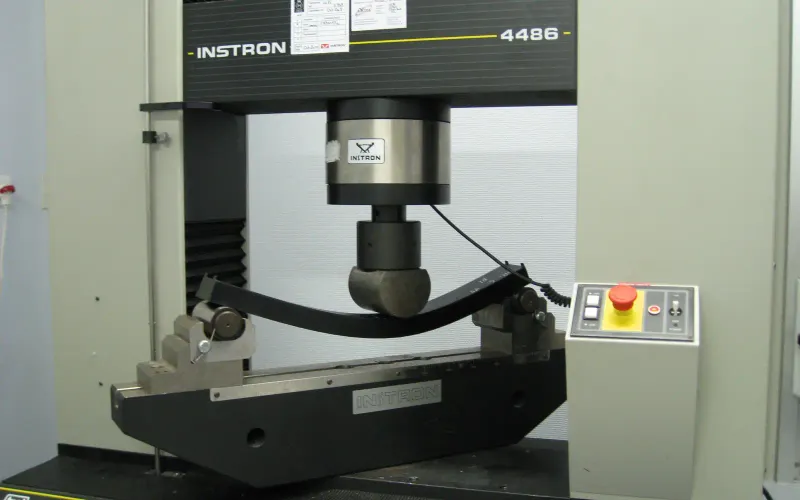
Compact HPL runs from 4 mm upward, to 25 mm across the programme. Enough kraft layers are pressed together that the panel carries itself. There is no substrate, no adhesive line, and no board edge to seal.
Where the difference actually bites: the cut edge
A bonded laminate on a wood-based board has a vulnerability the shade card never shows: the moment the panel is cut, the substrate is exposed. In a dry office that is a detailing problem solved with edge banding. In a washroom, a changing room or a laboratory it is a failure mechanism — water finds the edge, the board swells, and the laminate lifts.
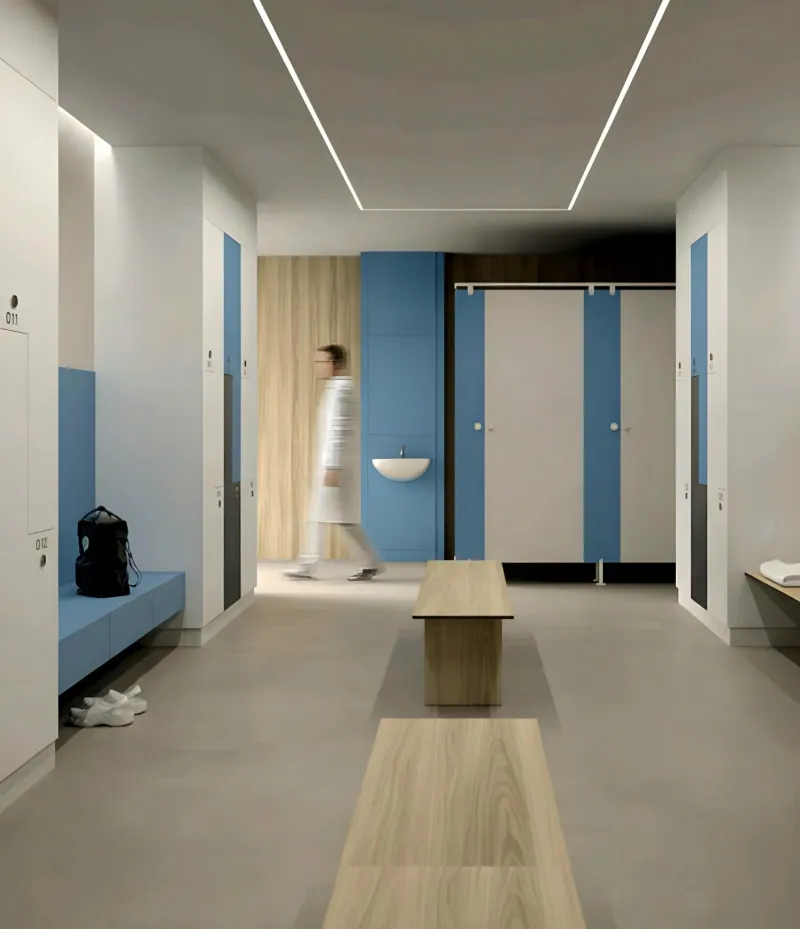
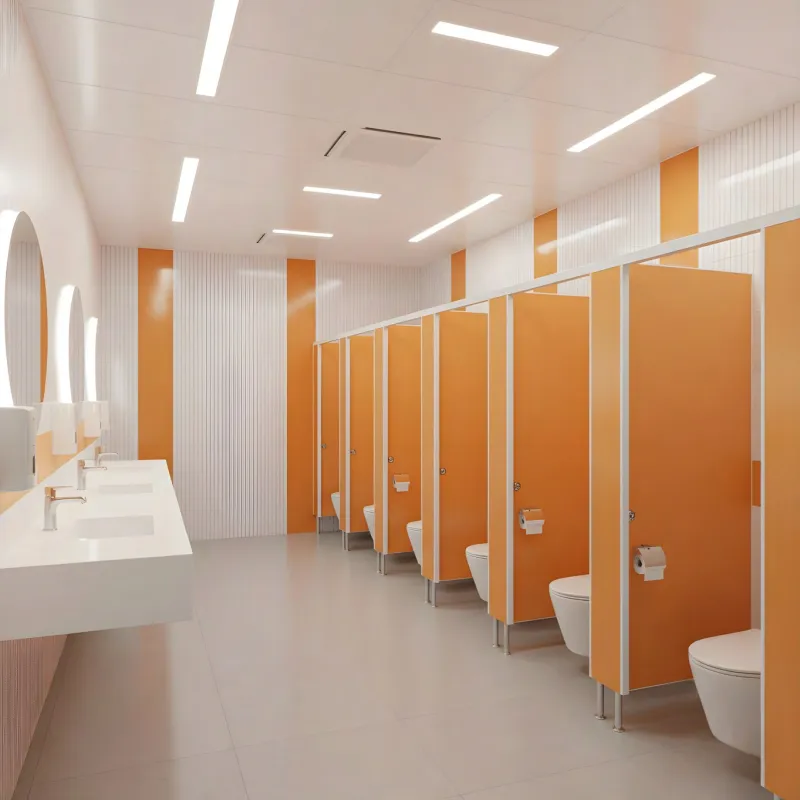
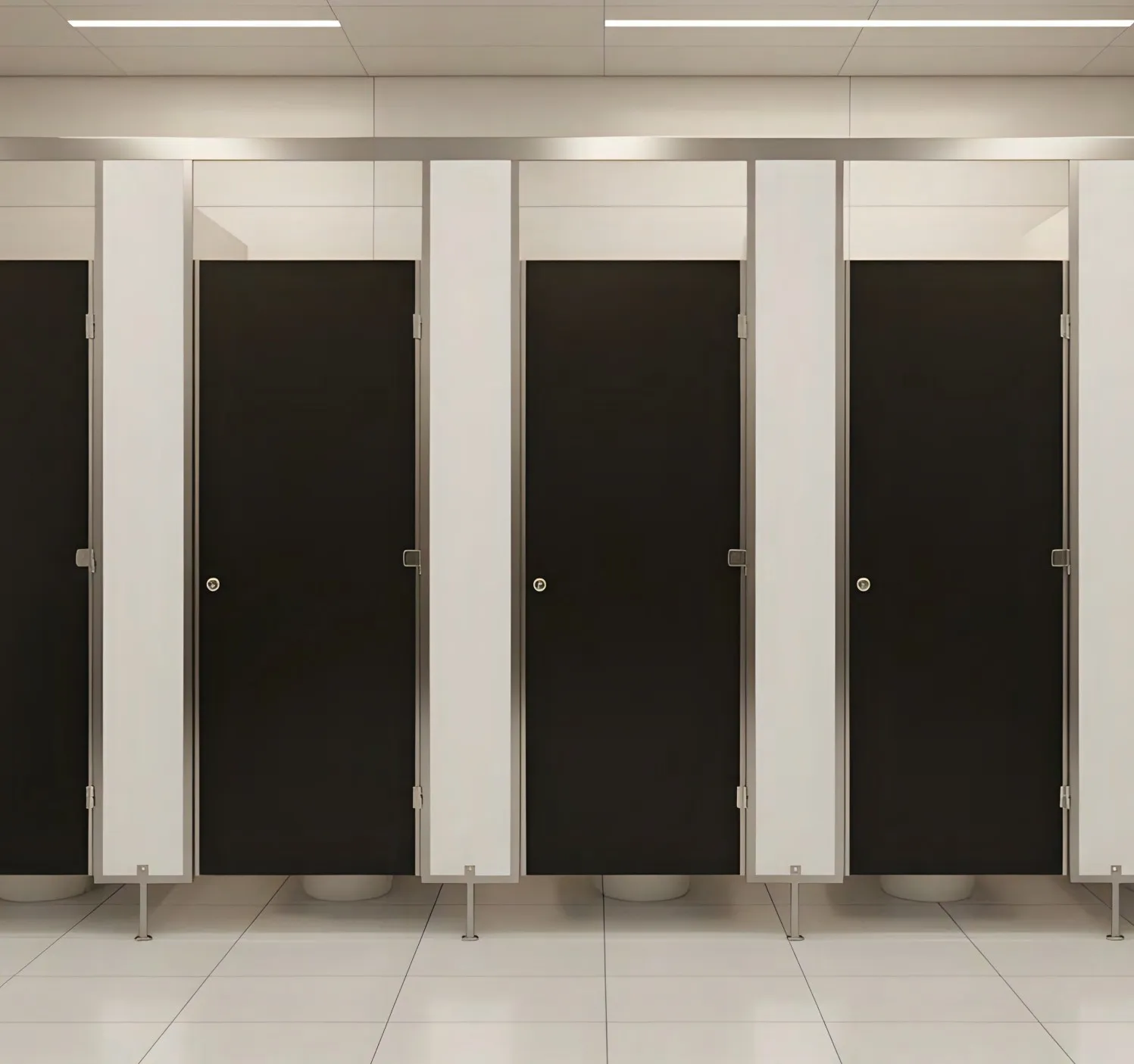
Compact has no substrate to expose. The cut edge is the same material as the face, which is why toilet cubicles, lockers and wet-area partitions moved to compact panels and stayed there. VAULT records a mass increase of 0.2 % after moisture exposure to EN 438-2.15, against a permitted 2 %.
How they are classified
The classification tells you which product you are holding. Decorative HPL is classified under EN 438-3 in horizontal (HGS) and vertical (VGS) general-purpose grades. Compact laminate for interior use is classified under EN 438-4; exterior-grade compact is EN 438-6, a separate part of the standard with its own weathering requirements.
If a data sheet quotes EN 438-3, you are looking at a thin laminate that needs a board. If it quotes EN 438-4 or -6, it is self-supporting. That is the fastest way to tell two similar-looking product sheets apart.
Choosing between them
The decision is rarely about appearance — the decor ranges overlap heavily. It is about whether the element has to stand up on its own and what happens at its edges.
- Furniture fronts, carcass linings, wall panelling on a substrate — decorative HPL, and specify the board separately.
- Toilet cubicles, lockers, wet-area partitions, laboratory surfaces — compact, every time.
- Worktops: compact if the surface is the structure; decorative HPL if it is bonded to a substrate that carries the span.
- Anything exposed to weather — exterior-grade compact only, and check the UV configuration.
The cost conversation
Compact costs more per square metre than a thin laminate, and comparing those two numbers is the most common mistake in this decision. The thin laminate needs a board, an adhesive, a pressing operation and an edge treatment. Compact needs cutting and drilling. Comparing a finished element against a finished element usually narrows the gap, and in wet areas it closes it entirely once replacement cycles are counted.
Common questions
Can decorative HPL be used in a bathroom?
On a wall, bonded to a suitable moisture-resistant substrate and with every edge sealed, yes. For cubicles, partitions or anything with an exposed cut edge in a wet area, compact laminate is the appropriate product — the substrate is what fails, not the laminate.
What thickness of compact laminate do I need for a toilet cubicle?
Cubicle panels are typically specified in the 10–13 mm range, with the exact figure driven by panel height, hardware and the local specification. VAULT is documented at 10, 12, 13, 15 and 18 mm. Confirm the thickness against the hardware system before ordering.
Is compact laminate waterproof?
It is highly moisture resistant rather than waterproof. Immersion in boiling water to EN 438-2.12 produces a 0.4 % mass increase and 0.2 % thickness increase against a 2 % limit for each. That is enough for wet-area interiors; it is not a substitute for a tanked construction.
Written for this site from manufacturer test reports. Not reproduced from any other source.