In short
- HPL is the lighter board: Rushil's exterior compact (1.47 g/cm³) weighs about 8.8 kg/m² at 6 mm, against roughly 12.8–14.8 kg/m² for an 8 mm fibre-cement board.
- It also comes in larger panels — up to 1830 × 4330 mm, against about 3.10 × 1.25 m for fibre cement — and keeps its colour, rated 4–5 on the grey scale after 3 000 hours of weathering.
- Fibre cement wins on fire: it can meet an A1 or A2 requirement where HPL, at best B-s1,d0, cannot. An old asbestos-cement façade must be removed under TRGS 519, not drilled.
How this review was put together
This article draws on Baunetz Wissen's entries on fibre cement and on HPL cladding; on a 2021 master's thesis on façade materials at TU Wien; on the Welsh Government's Advice Note 22 for the fire classes of HPL; on a guidance sheet of the city of Göttingen on asbestos cement; and on the European Agency for Safety and Health at Work's summary of the EU asbestos directive. Each point is attributed, and the sources are listed at the end.
Two boards, two recipes
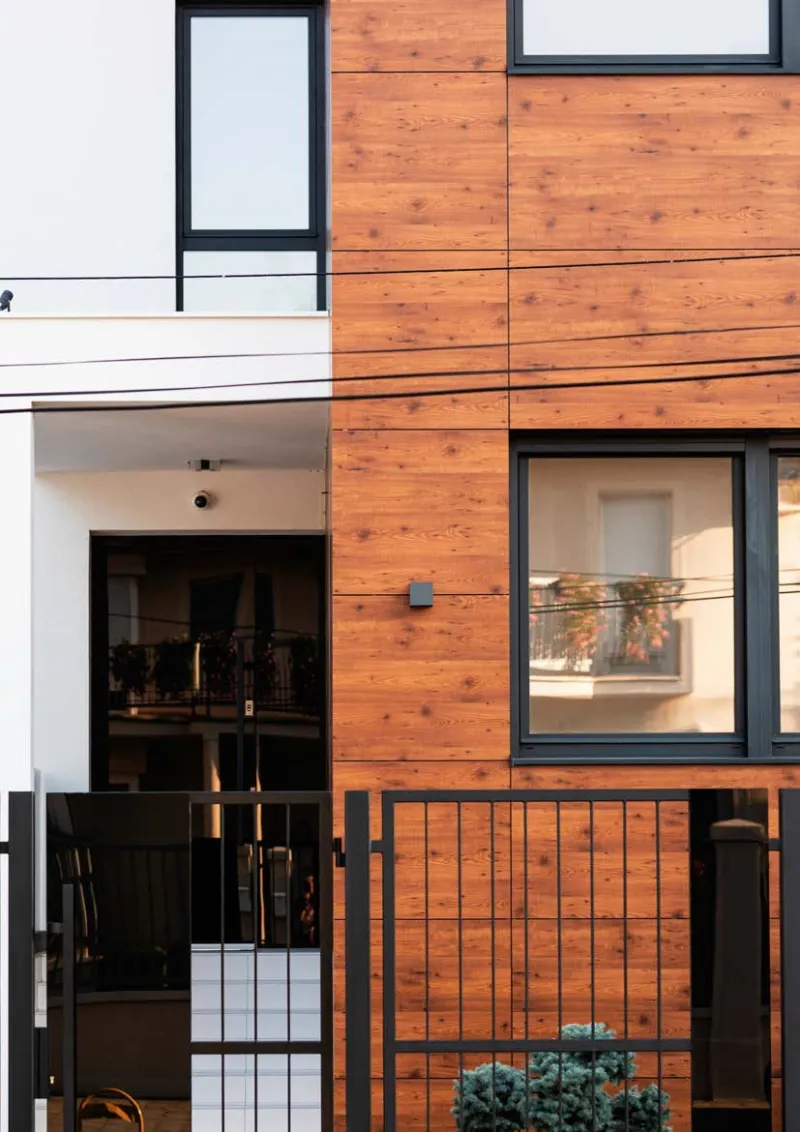
Baunetz Wissen describes today's fibre cement as mostly Portland cement — about 40 % — with limestone flour, recycled ground fibre cement and water, reinforced with synthetic organic fibres of polyvinyl alcohol or polyacrylonitrile and with cellulose process fibres. The fibres work much like the steel in reinforced concrete, and microscopic air pores make the boards frost-resistant. Baunetz calls the material watertight, UV-resistant, rot-proof and non-combustible.
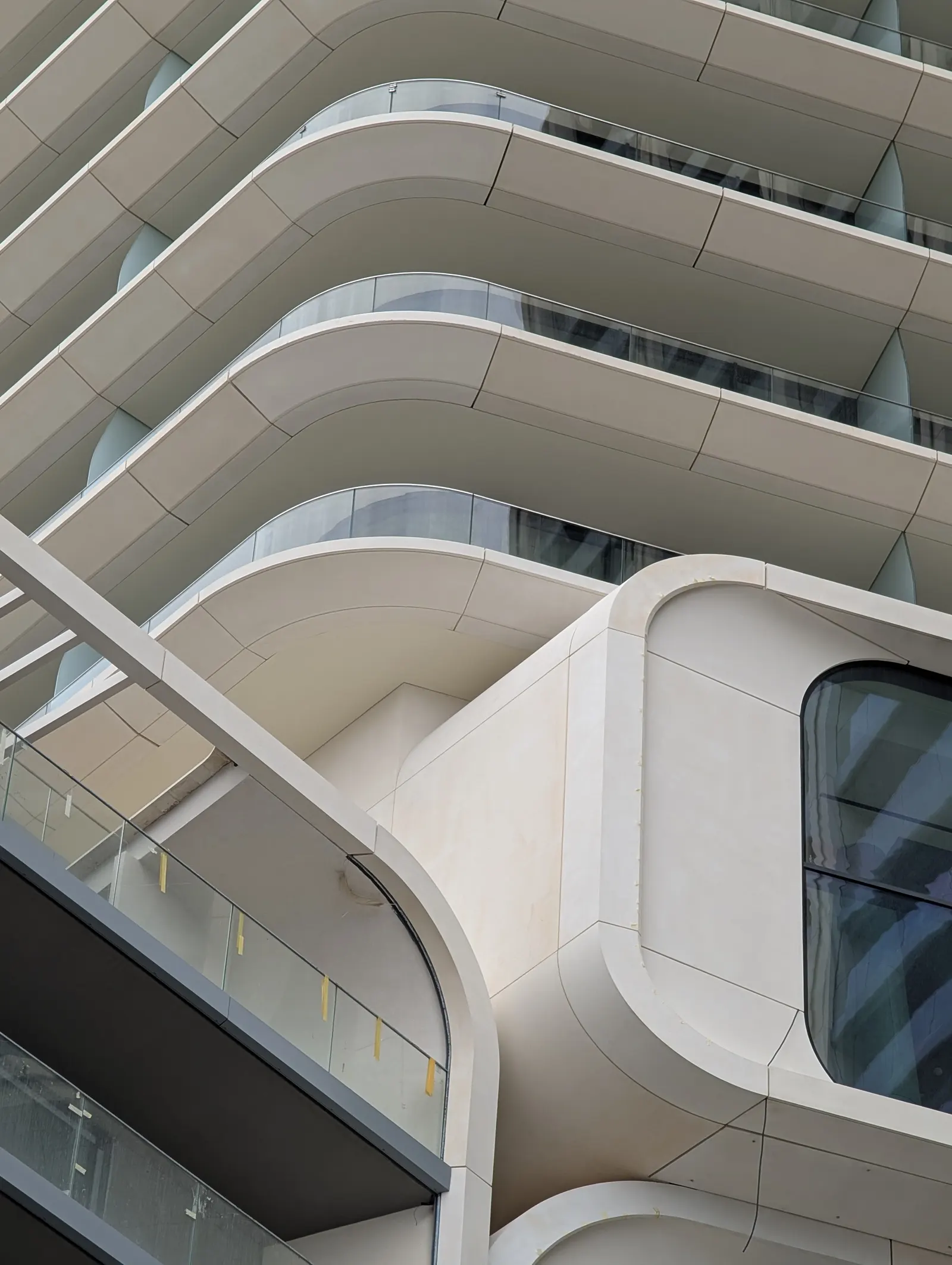
HPL is cellulose with phenolic and melamine resins, pressed under heat, with decorative layers that can be printed digitally or coloured to a shade card. Baunetz Wissen credits it with a hard, break- and impact-resistant surface, high bending stiffness, good weather resistance and a long life.
Fire: the clearest difference
Fibre cement is non-combustible, according to Baunetz Wissen. HPL is combustible: the Welsh Government's Advice Note 22 says fire-retardant grades typically achieve B-s1,d0 and panels without fire retardant C or D. Where a building code requires A1 or A2 cladding — England's residential buildings of 18 m or more, or German high-rise buildings, as our comparison with aluminium composite sets out — a fibre-cement board can be an option and HPL cannot. Check the classification of the specific product either way.
Weight
A 2021 master's thesis at TU Wien gives fibre cement a density of 1.60 to 1.85 g/cm³. Baunetz Wissen gives 8 to 12 mm as the usual thickness of fibre-cement façade boards, so a board weighs roughly 12.8 to 14.8 kg/m² at 8 mm and 19.2 to 22.2 kg/m² at 12 mm.
Rushil's exterior compact has a density of 1.47 g/cm³ — about 8.8 kg/m² at 6 mm, 11.8 kg/m² at 8 mm and 14.7 kg/m² at 10 mm. Thickness for thickness, HPL is lighter, and Baunetz gives 6, 8 and 10 mm as its standard thicknesses. On a façade where the substructure or the old wall limits the load, the difference counts.
Formats
Depending on product and maker, fibre-cement boards come in sizes up to about 3.10 × 1.25 m, according to Baunetz Wissen. For HPL it gives panel sizes of around 2.0 × 5.5 m, again varying by manufacturer; Rushil's exterior compact is made in formats up to 1830 × 4330 mm. Larger panels mean fewer joints and fixings per square metre and fewer breaks in the façade's pattern.
Surface, colour and cut edges
Fibre-cement surfaces, Baunetz Wissen explains, are grainy or smooth and either glazed matt with a pure acrylic coating or given an opaque colour coating that can be heat-filmed several times; some standard colours are made through-coloured, depending on the product. Depending on the board, cut edges may need re-impregnating on site so that moisture does not discolour them.
HPL's colour sits in its decorative layers, which can be individualised for a corporate design, and the panels are worked with ordinary carbide-tipped woodworking tools, which Baunetz says gives a high degree of adaptability on site. For exterior grades the question is weathering: Rushil's exterior compact was rated 4–5 on the grey scale after 3000 hours of artificial weathering to EN 438-2, against a required 3.
Fixing: let the board move
Baunetz Wissen recommends using fibre cement in ventilated constructions so that any moisture or condensation can drain away, on timber or aluminium substructures thermally separated from the wall. Mounting must be free of restraint, with joints of at least 8 to 10 mm backed by joint tape. Fixings include concealed undercut anchors with hangers, screws or rivets, horizontal aluminium clamping profiles, and adhesive systems in which board, adhesive and substructure form one closed system.
HPL panels are fixed to the battens visibly with screws or rivets or invisibly with undercut anchors or rear brackets, as Baunetz describes them. The logic is the same as for fibre cement — one fixed point, the rest free to move — and it is set out in our guide to detailing HPL façades.
When the old façade is asbestos cement
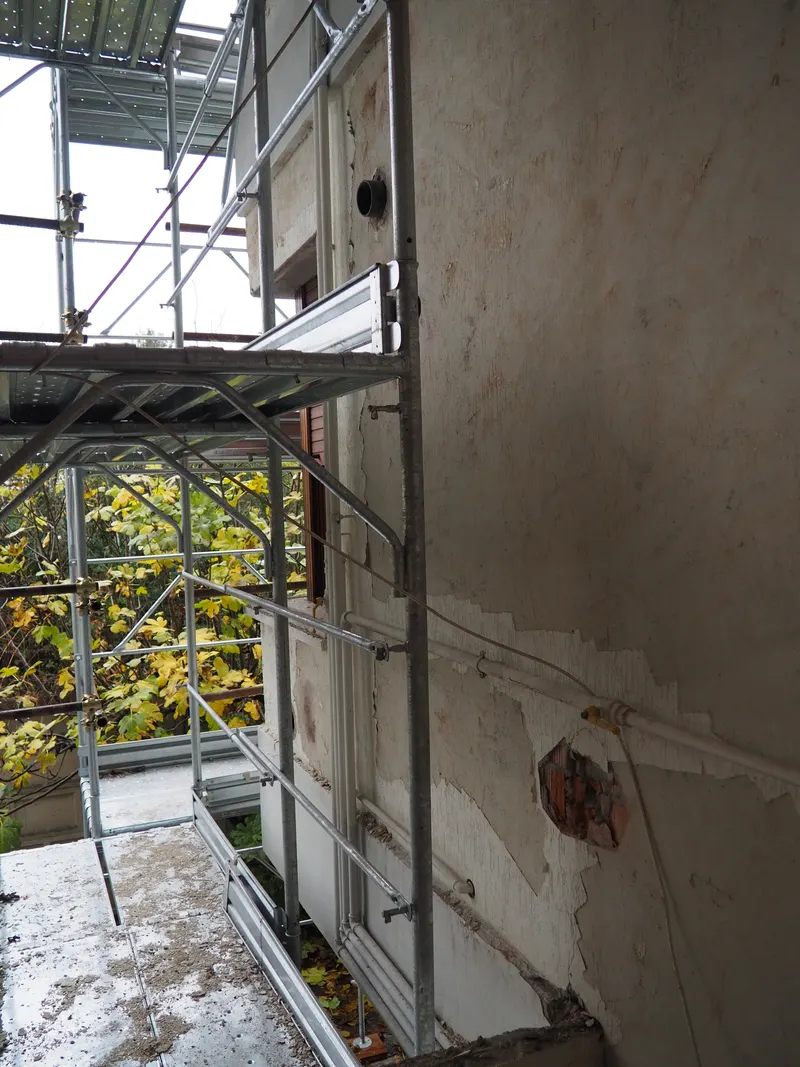
Fibre cement began as an asbestos product. Baunetz Wissen recalls that the fibre-reinforced cement products the Austrian Ludwig Hatschek developed at the end of the 19th century were 90 % cement and 10 % asbestos fibres; today's boards are asbestos-free. The old ones are still on many walls: the city of Göttingen's guidance sheet notes that asbestos-cement products remain common on older houses, including as façade cladding.
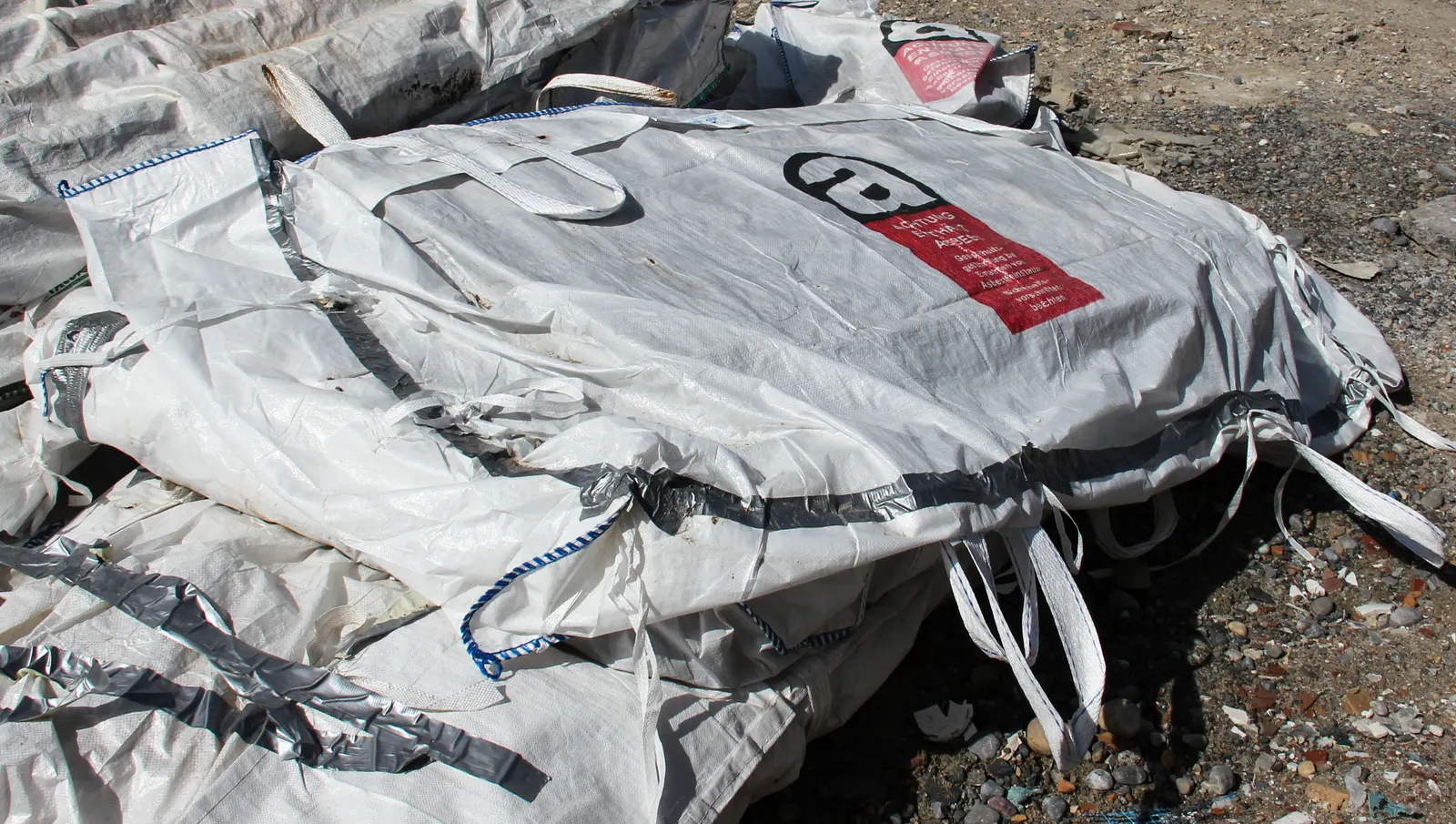
Installed and intact, they carry no obligation to remove them, the sheet says, because current knowledge shows no concrete health risk in that state. But they must not be worked mechanically — brushed, ground or drilled — because that can release the bound fibres. Permanent removal has to follow Germany's technical rule for asbestos work, TRGS 519, and the material may not be reused: making and processing asbestos products has been banned in Germany since 1993. Fixing a new substructure through old boards would mean drilling them, so the old cladding has to be dealt with under the asbestos rules first.
EU law sets the frame. The European Agency for Safety and Health at Work summarises Directive 2009/148/EC: exposure during demolition and asbestos removal must be kept to a minimum, with dust-free work processes, cleaning, and proper storage, transport and labelling of the waste. Directive (EU) 2023/2668 cut the binding limit for asbestos fibres in workplace air from 0.1 to 0.01 fibres per cm³, to be enforced from 21 December 2025, with a further reduction and electron-microscope counting required by 21 December 2029.
Reading this against the Rushil range
KLADS, Rushil's exterior compact to EN 438-6, is documented from 6 to 12 mm and in formats up to 1830 × 4330 mm. Its fire-retardant EDF grade is classified B-s1,d0 at 6 mm, so it is not an option where non-combustible or A2 cladding is required — a case where fibre cement can be. Elsewhere its lower weight per millimetre, its panel size and its decor range are the arguments for it.
Common questions
Is fibre cement non-combustible?
Baunetz Wissen describes it as non-combustible; check the classification of the specific product. HPL is combustible, with fire-retardant grades typically classified B-s1,d0.
Which is lighter, fibre cement or HPL?
HPL, at equal thickness: 1.47 g/cm³ for Rushil's exterior compact against 1.60–1.85 g/cm³ for fibre cement in a TU Wien thesis. A 6 mm HPL panel weighs about 8.8 kg/m²; an 8 mm fibre-cement board about 12.8–14.8 kg/m².
Can new cladding be fixed over an old asbestos-cement façade?
Fixing through it would mean drilling it, which the German guidance quoted here warns against because it can release fibres. Removal follows the technical rule TRGS 519; plan it with a specialist before the new façade is designed.
Sources
- Baunetz Wissen — Faserzementde
- Baunetz Wissen — Hochdrucklaminatplatten (HPL)de
- TU Wien (reposiTUm), Zelimir Vukovic — Neue Fassadenmaterialien und deren Anwendungen (Diplomarbeit)Jan 1, 2021 · de
- Welsh Government — Advice Note 22 – Use of High Pressure Laminate Panels in external wall systemsAugust 2019 · en
- Stadt Göttingen — Asbestzement – früher Baustoff, heute Abfallde
- European Agency for Safety and Health at Work (EU-OSHA) — Directive 2009/148/EC – exposure to asbestos at worken
Compiled for this site from the publications listed above. Summaries are in our own words, not quotations — read the originals for the full argument.