In short
- HPL comes in four gloss classes measured to EN 13722: high gloss above 70 GU, semi-gloss 30–70, suede 10–30 and matt below 10.
- The finish is not a coating: the press plate forms it in the melamine layer before it cures, so it is part of the surface itself.
- EN 438 accepts grade 3 for gloss finishes in the boiling water, steam and dry heat tests. Rushil's TOPAZ reports grade 5, the top of the scale, in all three, so it clears the requirement for any finish.
How this guide was put together
This guide draws on a technical leaflet on HPL manufacture from the ICDLI, the European laminate industry's association, and on Rushil's data sheets for Decorative HPL and the TOPAZ compact worktop, which give the gloss ranges and the EN 438 requirements for each finish.
A finish made in the press
In an HPL press the melamine resin of the decor paper melts under heat and pressure and then cures. The ICDLI explains that the surface structure, high gloss, matt or textured, is formed by the press plate pressed against the liquefied melamine layer, which then cures in that shape. The finish is not a coating applied afterwards: it is the shape of the cured melamine surface itself, made in the same step that gives the laminate its hardness.
That has a practical side. There is no separate lacquer to wear through or peel, and a matt or textured surface is the same melamine as a gloss one.
Four gloss classes, measured in gloss units
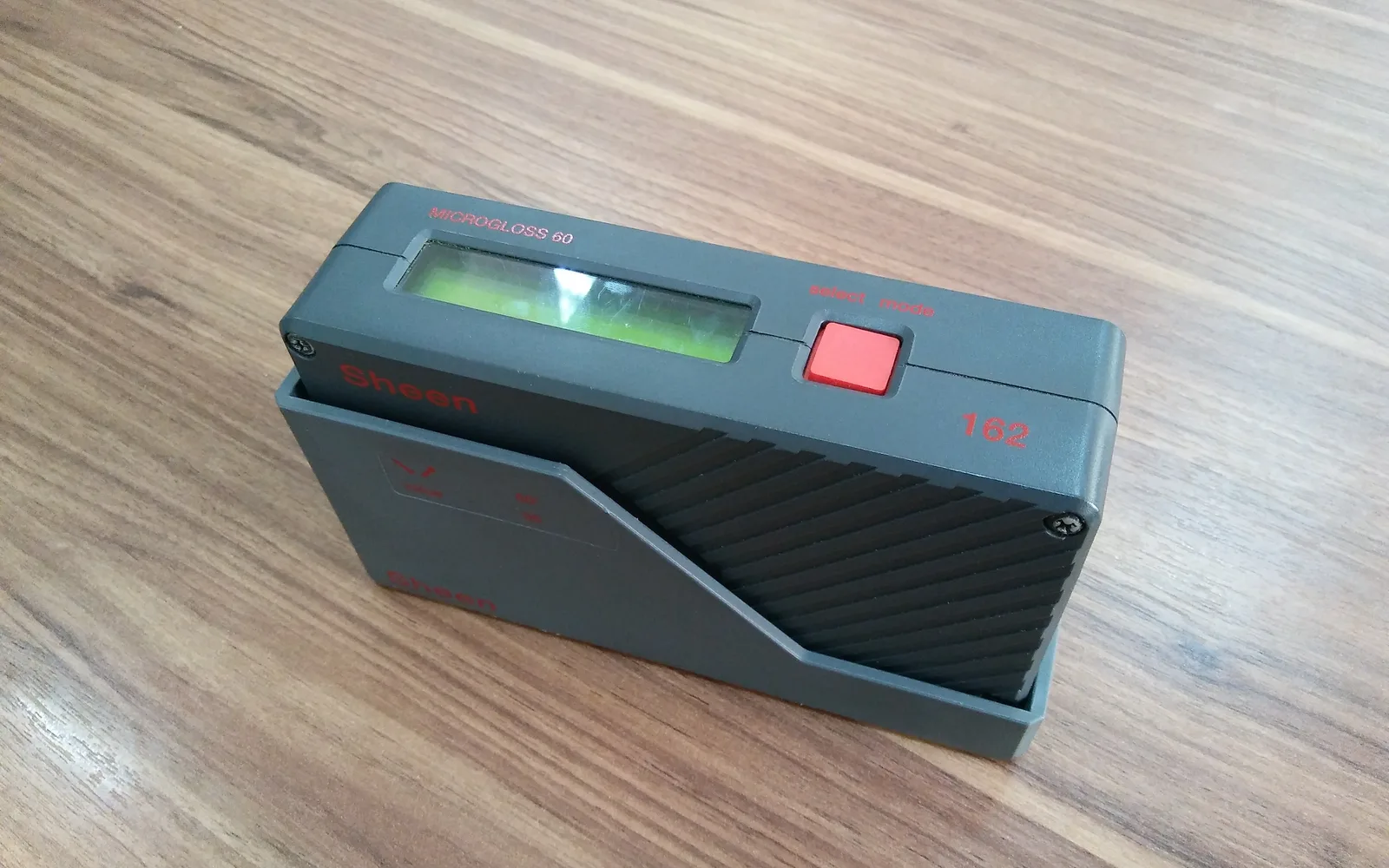
Gloss is measured with a gloss meter, which shines light onto the surface at a set angle and records how much is reflected, in gloss units (GU). Rushil's data sheets give four classes measured to EN 13722: high gloss above 70 GU, with a tolerance of ±15; semi-gloss from 30 to 70 GU, ±10; suede from 10 to 30 GU, ±5; and matt below 10 GU, ±3.
The tolerance narrows as the gloss falls, from ±15 GU for high gloss to ±3 GU for matt. When panels from different deliveries or different products meet in one room, specify the finish by name and compare samples side by side.
What EN 438 asks of each finish
EN 438 judges many of its tests by eye, on a grade from 1 to 5: grade 5 is no visible change, grade 4 a slight change of gloss or colour visible only at certain angles, grade 3 a moderate change. In the boiling water, water vapour and dry heat tests the requirement depends on the finish: grade 3 for gloss finishes, grade 4 for all others. The scratch test separates smooth from textured finishes too; the TOPAZ data sheet states grade 2 for smooth and grade 3 for textured.
Rushil's TOPAZ data sheet reports grade 5, the top of the scale, in all of these tests: boiling water, water vapour, dry heat at 160 °C and scratching. That clears the requirement for every finish, gloss or not. For Decorative HPL the data sheet reports grade 5 for boiling water and wet heat and grade 4 for water vapour and dry heat, the level required of non-gloss finishes. These are test results, not a declaration of conformity.
Choosing a finish
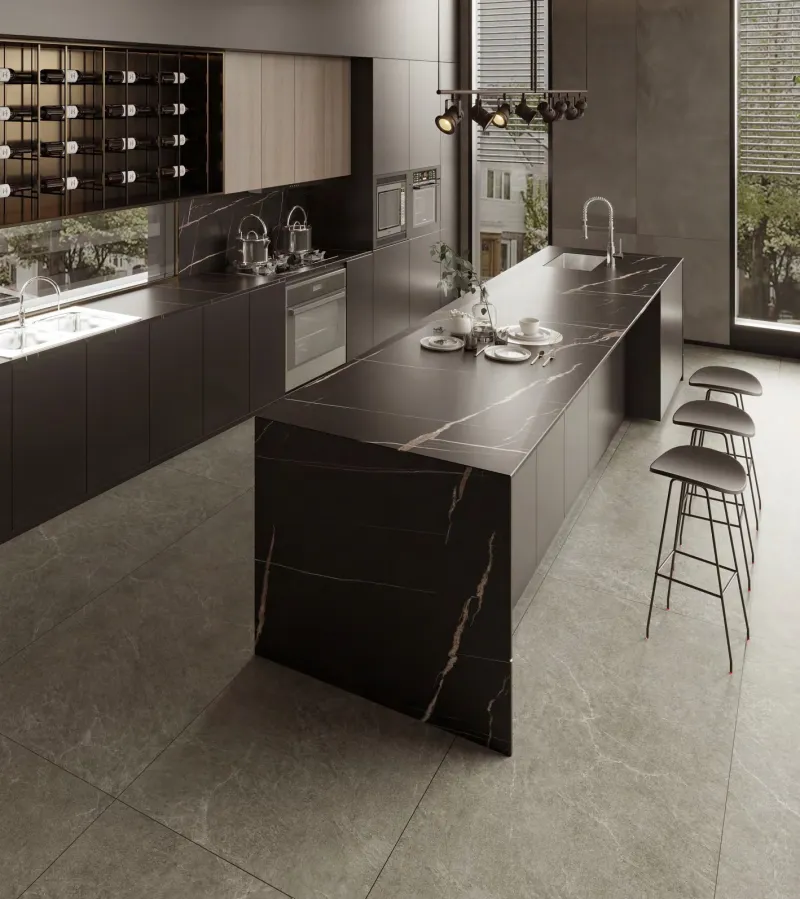
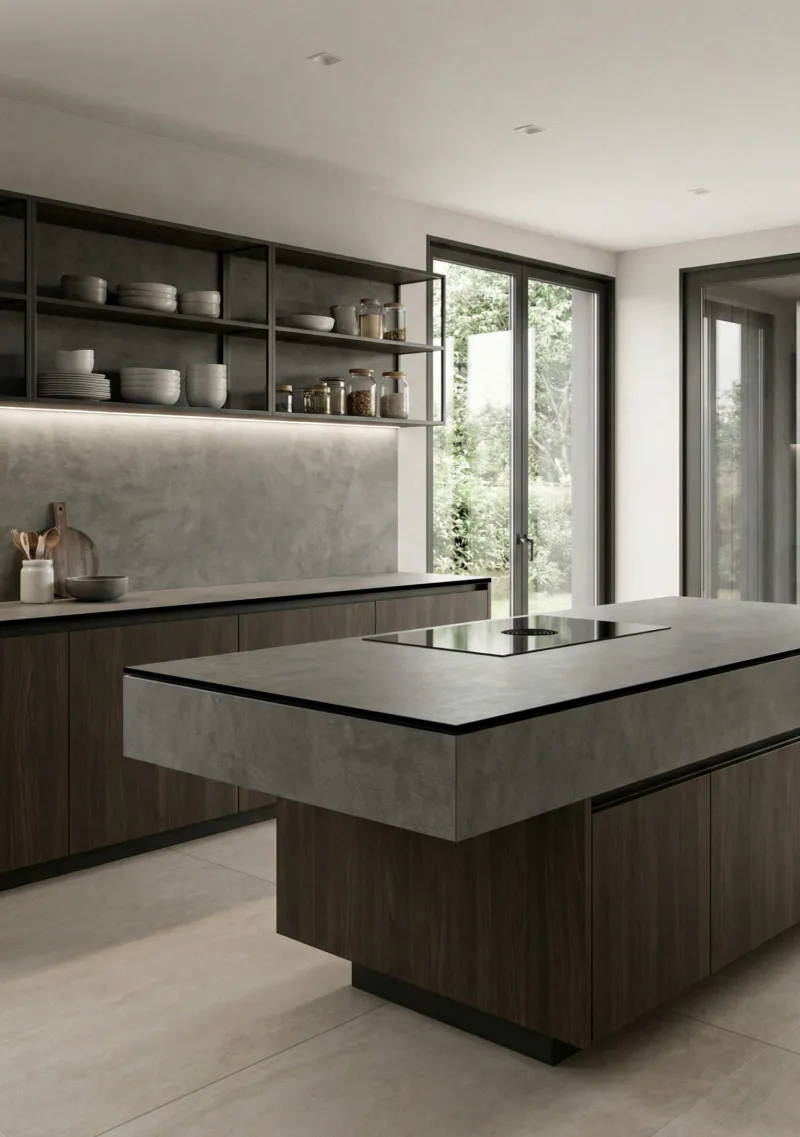
High gloss gives colours the greatest depth and reflects the most light. Semi-gloss keeps some of that depth with less reflection. Suede and matt give a calm, low-reflection surface for large areas such as worktops, tables and wall panels.
Lighting changes how any finish reads. Under a downlight a high-gloss surface can show glare, and every gloss level looks different in daylight and artificial light. Check samples in the light of the actual room, and order the panels for one space in the same finish.
Rushil's finishes
Rushil makes Decorative HPL and compact in high gloss, semi-gloss, suede and matt, each with a published gloss range and tolerance. On the TOPAZ compact worktop the surface reaches the top grade of EN 438 in the heat, water and scratch tests. Availability varies by decor, so name the finish when you request samples, and judge them in the room where the surface will be used.
Common questions
How is the gloss of HPL measured?
With a gloss meter, in gloss units (GU). Rushil's data sheets give four classes to EN 13722: high gloss above 70 GU, semi-gloss 30 to 70, suede 10 to 30 and matt below 10, with tolerances from ±15 to ±3 GU.
Is a gloss HPL finish less durable?
EN 438 accepts grade 3 for gloss finishes in the boiling water, water vapour and dry heat tests, against grade 4 for other finishes. Rushil's TOPAZ data sheet reports grade 5, the top of the scale, in all three, so the result clears the requirement for any finish.
Is the finish of HPL a coating?
No. The ICDLI explains that the surface structure is formed by the press plate against the melamine layer before it cures, so the finish is part of the cured surface itself.
Sources
- ICDLI — International Committee of the Decorative Laminates Industry — An Introduction to Manufacturing and Material Types (technical leaflet)July 2015 · en
- Rushil Decor — VIR TOPAZ (CGS / CGF) — Product Data Sheeten
- Rushil Decor — Decorative HPL (HGS / VGS) — Product Data Sheeten
Compiled for this site from the publications listed above. Summaries are in our own words, not quotations — read the originals for the full argument.